
Beaver - Commonly Trapped Furbearer
UTILIZING OUR ABUNDANT MISSOURI WILDLIFE
Beaver
Fast Facts
- Weight: Over 70 pounds
- Incisor Teeth: 4 (two upper, two lower)
- Mating Season: Late January–February
- Gestation: 107 days
- Litter Size: 3-5 kits
- Swimming Ability: Can swim within hours of birth
- Dive Time: Up to 12-15 minutes
- Life Span: Up to 12 years
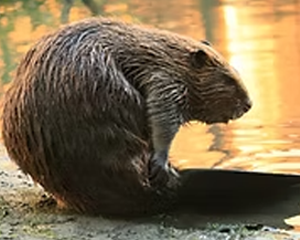
Beaver are the largest rodents in North America. Adults can grow in size throughout life and, when food is abundant year-round, can weigh more than 60 or 70 pounds. Unlike many species, female beaver are as large as or larger than males of the same age. The paddle-shaped, leathery tail is a definitive feature. An adult’s tail is usually about 10 inches long and 5 or 6 inches wide, with a thickness of around ½ inch at mid-point. The hind feet are fully webbed and large (≈ 6 inches long), the spread of toes equal to or greater than the length as observed when swimming. There are five toes with robust nails; one of the toes has a split toenail that acts like a comb for grooming. The front feet are comparatively small (2½–3 inches long) and are not webbed; beaver often swim holding the front feet against their chest while the webbed hind feet provide propulsion and the tail serves as a rudder.
Description
Guard hairs in the beaver’s fur can grow up to 2 inches, overlaying a dense, ~1-inch underfur. Fur colors range from blond to nearly black depending on region and individual. Both males and females have large castor glands beneath the skin on their lower bellies. These glands produce oil that the beaver combs into its fur to waterproof the coat and also deposit as a territorial/mating scent marker in spring. Beavers have transparent eyelids for underwater vision and valves on ears and nose that close when submerged. Their upper and lower incisor teeth overlap; chewing friction causes them to self-sharpen. Similar to birds and reptiles, beaver have a cloaca—one lower‐body opening that serves urinary, bowel and reproductive functions, and also secretes castor-gland oil.
Reproduction
Beaver typically live in family units composed of the breeding pair, yearlings and the current season young (kits). Breeding occurs in late January or February in most states. During this time young from the previous year (≈22 months old) are often evicted to find new territory and mates. Gestation is about 107 days. Adult males and kits usually occupy a temporary bank-den until the new litter is born (April–June). Litter size typically 3-5 kits. The kits are fully furred at birth, with eyes open and visible incisor teeth. They enter the water easily and may be swimming within one day. Most adults remain monogamous and stay with their mate for life.
Habits
Beaver require deep water for protection. They alter landscapes dramatically via dam-building and flooding. Dams can reach hundreds of feet long and up to 7–8 feet high. Permanent lodges often involve layered stick piles above water level with underwater tunnels leading to an inner chamber. The exterior is plastered with mud and rocks for insulation and protection, leaving the peak porous for ventilation. The interior contains two levels: one near waterline and one elevated for nesting and resting. In flood-prone or high-current areas, beaver may build bank dens with underwater entrances and stick-caps over living quarters. Feed-piles may be created in northern areas—large groups of small trees/limbs submerged near the den before ice prevents above-ice activity.
For example, beaver may dig shallow food pockets into banks near waterline, or may construct feed piles underwater for winter food storage. These structures allow young beaver to access nourishment without traveling far from the den. Beaver also mark territory in early spring by dragging up mud and debris and depositing it in mounds along shores; castor-oil deposits often stain the bank and emit strong odor. Their territories seldom overlap—generations may inhabit a choice area for years, sometimes building canals to float food from inland cutting sites.
Although they can remain submerged 3–4 minutes during routine activity, beaver are capable of holding their breath for 12–15 minutes. Large individuals might swim nearly ½ mile underwater before resurfacing.
Range
Beaver live in every North American state and Canadian province and are legally harvested in 46 states. They are common across marshes, rivers, streams and lakes, and adapt well to a wide range of aquatic habitats.
Tracks and Scat
Beaver significantly modify their environment by building dams and lodges that alter flow and water levels—creating deeper pools, marshes and wetland habitat which benefit many other species like muskrats, mink, otter and waterfowl. These modifications in themselves are signs of beaver presence. In trout streams beaver dams may have negative impacts by raising water temperatures or obstructing migratory fish. Beaver also host internal parasites like giardia, which can contaminate water reservoirs. Predators include mountain lions, wolves, lynx, bobcats, and occasionally bears for mature beaver; juveniles are vulnerable to coyotes, eagles and large owls. Diseases such as tularemia can devastate populations. A beaver reaching 12 years of age is considered old.
Contact Missouri Trappers Association
Get in touch with the Missouri Trappers Association by filling out the contact form. We appreciate your support!
For questions regarding your membership, please call
Joslyn Search: (660)292-1911